Akvariefisk
I denna guide:
Robert-fisk.com är min personliga hemsida of söt- och saltvattenakvarium. Här kan du lära dig allt från hur man sätter igång sitt första akvarium och skaffar lämplig nybörjarfisk till hur man odlar Diskus och tar hand om känsliga mjukkoraller. Jag har för närvarande över 100 artprofiler och mitt arkiv uppdateras kontinuerligt med fler. Jag har separata avdelningar om hur man sköter och sätter up söt och saltvattensakvarium. I sötvattensakvariumavdelningen har jag samlat information om allmän akvarieskötsel, akvarieväxter, akvarieutrustning, fiskmat, fisksjukdomar och mycket, mycket mer. Den som är intresserad av att odla fisk kan ta en titt i min särskilda odlingsavdelning. Du kan även hitta artspecifik odlingsinformation i de olika artprofilerna, och glöm inte att ta en titt på artikeln om lämplig yngelmat i artikelarkivet.
Sötvattensakvarium
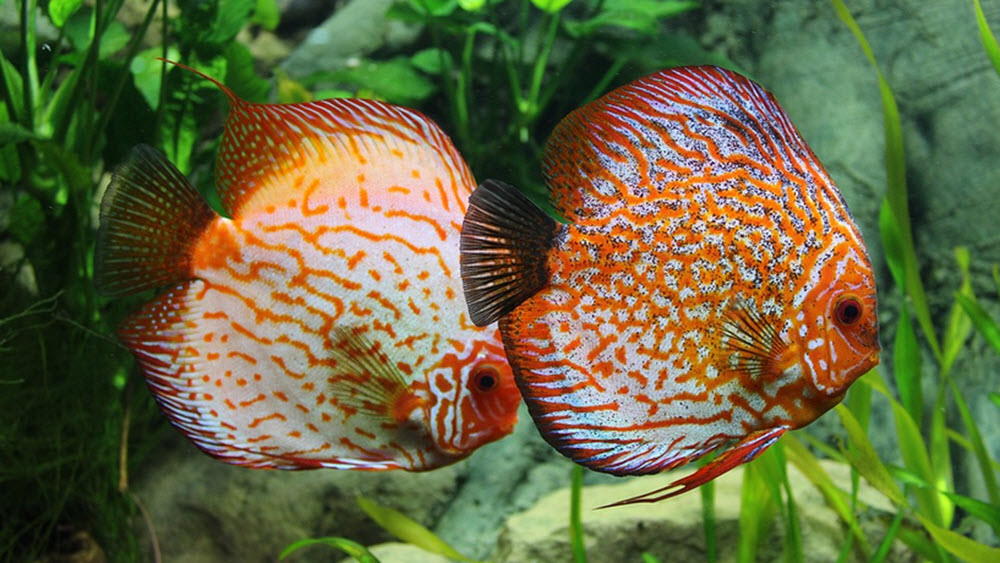
Diskus i Sötvattensakvarium
En majoritet av alla fiskarter som hålls av svenska akvarister är tropiska sötvattensfiskar och vi har därför en stor samling artprofiler över tropisk akvariefisk lämplig för sötvattensakvarier. Jag har försökt inkludera en bra blandning av nybörjarfisk, medelsvår fisk och svårskött fisk, samt ta med arter från många olika delar av världen. Genom att klicka på en artprofil får du bland annat veta vilket temperment fisken har, hur svår den anses vara att sköta, vilken typ av akvarium den trivs bäst i och inom vilka intervall vattentemperatur, pH-värde och hårdhet bör ligga. Jag har också strävat efter att inkludera information om hur man odlar tropisk fisk i akvarium.
Populära sötvattensfiskar
Levandefödare

Saltvattensakvarium
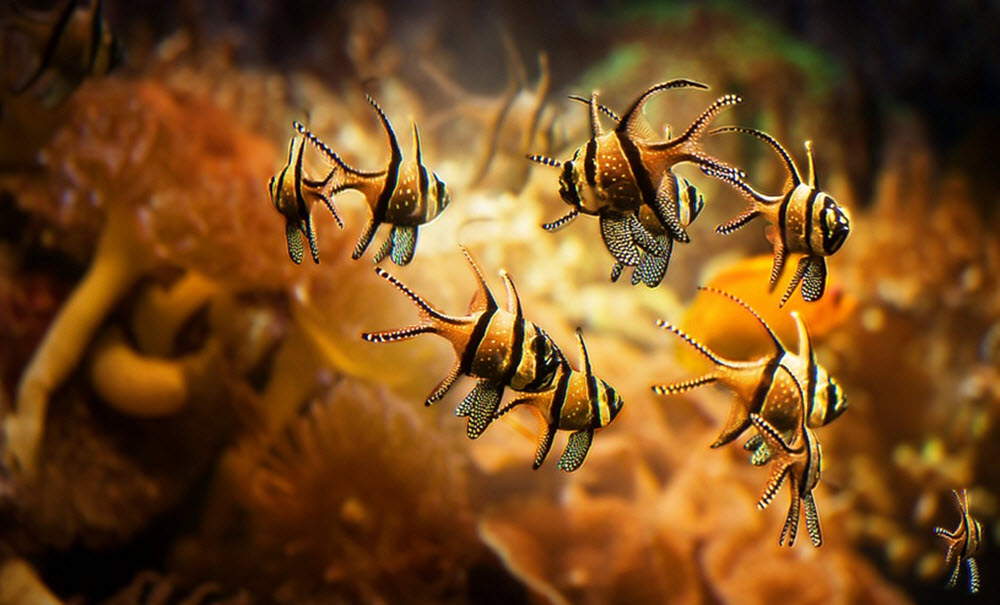
Bangaii fiskar i ett saltvattensakvarium. Bangaii fiskar är en typ av frökenfiskar.
Att hålla ett saltvattensakvarium är normalt sett svårare än att hålla ett sötvattensakvarium och det är därför bäst att skaffa sig lite erfarenhet från sötvattensarter innan man sätter igång. Saltvattensakvarier brukar även kräva dyrare utrustning och tillbehör än sötvattensakvarier och är därför ovanliga bland nybörjare. Den extra tid och kostnad man måste lägga ned är dock väl värt det eftersom man får en chans att hålla så många vackra och spännande marina djur och växter. Många saltvattensakvarister har flyttat fokus från fisk till andra marina arter såsom koraller, anemoner, sjöstjärnor, sjöhästar och olika sorters snäckor. Min avdelning om saltvattensakvarium innehåller därför inte bara information om populär akvariefisk såsom Clowfisk, Frökenfisk och Muränor utan har sektioner för en lång rad ryggradslösa djur därtill.
Kallvattensakvarium
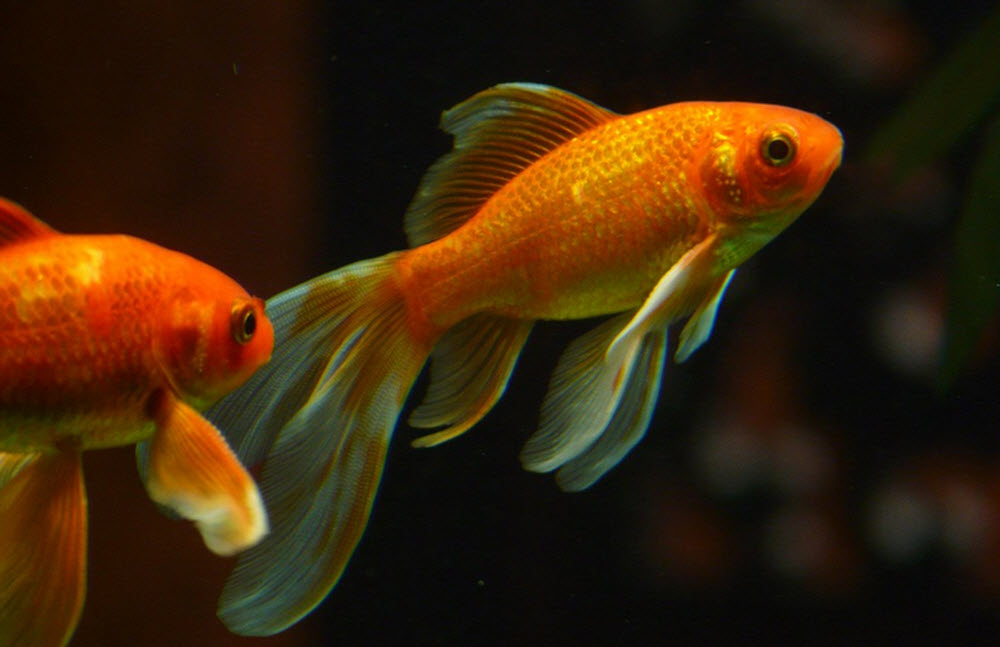
Guldfiskar är populära kallvattensfiskar.
Kallvattenfisk kan hållas i såväl akvarium som utomhusdammar och det finns en hel del arter som kan hantera även kalla svenska vintrar så länge de får en tillräckligt djup damm. Exempel på vanliga kallvatten fisk arter är japansk Koi och de olika guldfiskvarianterna. Att sköta kallvattenfisk skiljer sig något från att ta hand om tropisk fisk, och om du vill anlägga en trädgårdsdamm i din trädgård så tillkommer givetvis en rad faktorer som måste tas i beaktande. Kallvatten fisk är dock ofta tuff och tålig, och när man väl läst in sig lite på ämnet och fått igång en fungerande trädgårdsdamm brukar de vara oerhört lättskötta. Det finns givetvis undantag och det är därför alltid en bra idé att läsa på om de kallvattensfiskar du är intresserad av innan du köper dem. Så kallade ”Ce gulfiskar” är bra nybörjarfisk eftersom de behållit mycket av de överlevnadsegenskaper vi finner hos deras vilda förfäder. Koi däremot är betydligt känsligare och har bland annat högre krav på vattenkvalitén.
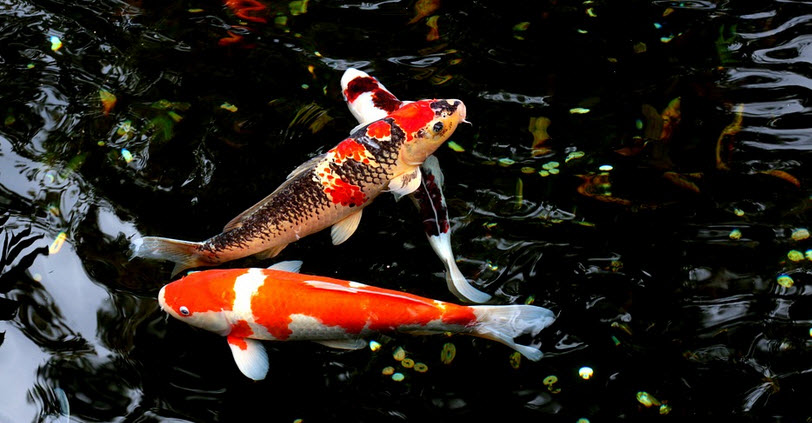
Vackra koi karpar i damm.